I have been, as those in the know call it, in a book funk. Unable to read, unable to focus, paralyzed by the reality of a decimated political culture and - let's be honest here - the machinations of an unethical, uninteresting, possibly illiterate boor sitting in the place of the Presidency. I can't look away from the daily chaos and humiliation that the United States must now embrace with this guy at the rudder. I will admit that I've begun to just meditate on pictures of Justin Trudeau, of Obama windsurfing in the Virgin Islands, of Jack Kennedy standing around looking fine. Where did we go wrong, as a nation? Honestly, I have a number of thoughts about that but they haven't quite yet come together, so we will save that rich topic for another day. But the good news - the great news! - is that after my daily Trudeau meditation today (I love to see him boxing - a head of state with a tattoo?! He's so Gen X!), I decided to clean my kitchen and tidy up my home and then, with Facebook and Twitter removed from my phone (as they should be, really), I sat down to read.
I finally settled on Shadowbahn by Steve Erickson. The premise of the story is this: the Twin Towers suddenly arrive in the South Dakota Badlands, 20 years after 9/11. And then it starts to get weird.
I'm not through it yet, but I'm mesmerized and excited. I might actually finish a book this weekend! Maybe this is the breakthrough I've been looking for!!
If you're not busy with a book right now, I dare you to dive in and read this one with me. Don't you need a break from reality, anyway?
Friday, February 17, 2017

Wednesday, February 1, 2017
Bookbaggin' Its Best Books of 2016: The "they're probably all in paperback now" Edition
Why? Why has this taken me so long to do? I could explain that it was the holidays, or health issues, or indecision over what my favorite books were last year,...but the honest truth is that I just slacked off and then lost my motivation. And now...Now I just want to start talking about the new books I've read so far this year, but I don't want to leave any loose ends from yesteryear. So, enjoy my list of favorites from 2016 and know that I'm making good progress on my TBR list so far this year and will have a lot to share with you in the weeks and months to come!
Last year, by my calculations, I read 99.5 books for pleasure. It sort of kills me to admit that I didn't finish the very last book of the year to make my 100 books goal a reality, but honestly, I didn't like the book I picked and I just ran out of time. C'est la vie. You can't like every book, after all.
That said, I found MANY of my choices this year to be insightful, provocative, compelling, and deeply satisfying. I tend to read mostly new works and it's very reassuring to discover that so many people are publishing so many solid new works. Artistry and devotion are still very much alive in the 21st century, which can be forgotten amidst the cacophonous slog of daily news here and abroad, leaving human misery and disappointment in its wake, such a disheartening mass of information that one can barely wriggle out from underneath its weight. But books! They take us on journeys, they force us to abandon our twitter feeds and news alerts, they even help filter out the sounds of my children bickering with each other. Miraculous little suckers, aren't they?
I should note that I read many of the blockbuster books this year (The Nest, Underground Railroad, My Name is Elizabeth Barton, The Girl with the Lower Back Tattoo, etc) and enjoyed most of them very much. The books that made my favorites list, though, are books that I didn't really see on a lot of other best of the year lists. Variety is the spice of life and all that. So. In no particular order, here are the books that made my dreary days more bearable and my beautiful days even better:
The Best in Fiction:
1. The Unseen World by Liz Moore
Moore creates an utterly believeable world that orbits around the relationship between a girl and her increasingly eccentric genius of a father. A beautiful, intelligent, moving investigation of the meaning of love, the vast interior world of memories, the breathtaking possibilities of technology, and what it means to make a family. Enchanting and provocative.
2. Underground Airlines by Ben Winters
This novel bases itself on the assumption that the civil war never happened and that slavery still exists in several Southern states early in the 21st century. It's a warped and utterly engrossing story, so well constructed that it's easily believed, and the longer you read, the more uncomfortable you become, because of course you can't help but recognize that perhaps this imagined existence is really not so far from our own true one. The implications of trauma, the reality of fractured identities, and the awful tension between self-preservation and ethical conduct are front and center here. A really successful novel that deserved much more attention than it actually received, in my opinion.
3. Beauty is a Wound by Eka Kurniawan
I hadn't read anything by an Indonesian author when I picked up this book on a whim at the bookstore one day. It drew me in quickly and completely, and I could barely stand to put it down. The author's ability to balance the book on a foundation that was outrageously funny, absolutely gritty, and even plain otherworldly in turns mesmerized and excited me. Felt a little like Marquez to me at first, but then it (or, more likely, I) found its stride and unfurled a mischevious tale of epic yet utterly readable porportions.
4. Fellside by MR Carey
Carey won me over with his recent bestseller The Girl with All the Gifts, a dystopian thriller featuring an unusually bright and blighted young girl (that is being made into a movie this year, I believe #ReadTheBookFirst) at the center of the action, so I jumped at the opportunity to devour another one of his tales, and this one, although quite different from the last, did not disappoint. It begins with a woman being sentenced to prison for a crime that she doesn't remember committing. As she settles into the eerie and claustrophobic world of the woman's high-security prison - the Fellside of the title - she attempts again and again to will herself to remember the moments leading up to and including her crime. But as she works to regain her memory, she also begins hearing voices, coming from the very walls of the prison itself. As she sinks deeper into the unknowns, strange things begin to happen at Fellside...This is a thrilling mystery that offers answers I never saw coming. My skin is prickling again just thinking about this book.
The Best in Non-Fiction:
1. The Light of the World: A Memoir by Elizabeth Alexander
Alexander relates the story of suddenly losing her beloved husband. How does a mother and her children recover from such a loss? Alexander shows us that with heart, with art, with honesty, you never recover, but you can gather yourself together and go on. This searing memoir will leave you in tears but it's worth every sniffle. A truly beautiful tribute to an extraordinary man and the family he left behind.
2. Negroland: A Memoir by Margo Jefferson
Set in my hometown of Chicago, this story of a young woman growing up in an upper-middle class enclave of black America during the Civil Rights era offers an eloquent and insightful look into a black community that rarely gets book-length treatment.
3. The Sound of a Wild Snail Eating by Elizabeth Tova Bailey
Suddenly bedridden by a mysterious illness and the complicated autoimmune disease that follows, Elizabeth Bailey goes from an active, full life to almost no life at all. She's too exhausted and ill even to read or watch tv, and thus spends her days lying in bed in the semi-darkness. A friend stops by with a potted plant that has a little snail living in it, though, and much to Bailey's surprise, she becomes enchanted by her new roommate, who helps her reframe her situation and find new hope. A truly sweet and enchanting little book.
4. In the Country We Love: My Family Divided by Diane Guerrero
I've never seen "Orange is the New Black," so I'm not even sure why I picked this book up. It may have been the cover, which features Guerrero holding a giant cone of cotton candy. In any case, it was a terrific find. Guerrero tells the story of her family: she was born in America to undocumented workers who had arrived (via visas, as the majority of undocumented workers do) from Colombia. Her childhood is one spent in the shadows, living within a vibrant community of Latinos (many documented, some not) but always afraid that INS will arrive and take her parents away. When the worst DOES happen, the teenage Guerrero suddenly finds herself having to patch together a life for herself mostly on her own (shockingly, neither INS nor the appropriate agencies within HHS follow up with her and guarantee her safety as an American citizen and a minor). Her ability to hide her trauma and life situation from her fellow classmates and friends is remarkable, as is her dedication to making her dream of college a reality. Guerrero's story should be required reading for anyone interested in learning more about the realities of families divided due to citizenship.
Favorite New Author Discovery: Gail Carriger
Gail Carriger writes funny, appealing stories of (young) women who just happen to be "intelligencers" (spies), supernaturals, or a combination of the two. Hobnobbing with the London elite, which in her steampunked Edwardian setting includes influential members of the werewolf and vampire classes, Carriger's characters get caught up in all kinds of complicated plots. When they're not saving the British from themselves, her antagonists are floating through the skies in airships, drinking lots of tea, and (despite their best efforts) falling in love. Sitting down with one of Carriger's books automatically makes me happy. I blew through the Finishing School series, The Custard Protocol series, and the The Parasol Protectorate books in just a few weeks - and then I set out to reread them. She's started publishing novellas to provide the backstories of some of her best characters, and every time one appears, I can't stop clapping. She also has a most pleasing public persona; I wish I could meet her for tea some time.
Sunday, October 23, 2016
Lit Quick Lit Picks, .4
The Answer, My Friend, to Who Won the Nobel in Literature this year, is Blowin' in the Wind
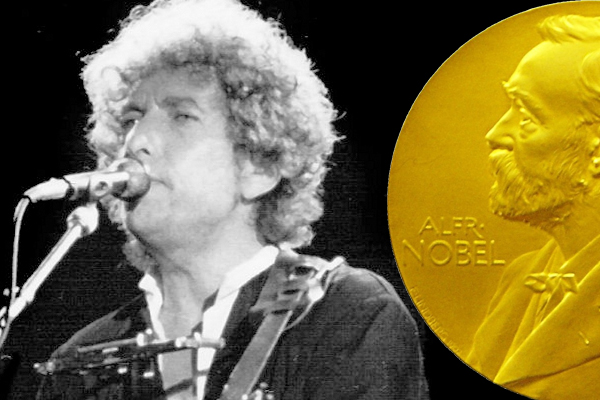
The biggest news to hit the literary world within the last two weeks, as far as I'm concerned, has been the awarding of the Nobel Prize for Literature to Bob Dylan - and the reclusive singer's notable lack of response to winning the much heralded award. The decision to award Dylan with the prize was quite controversial. His lack of response to the award has also been controversial, with one member of the Committee calling him "arrogant," while writer Will Self urged him to reject it because of the prize's ties to an explosives and armaments fortune.
Personally, I find this unexpected and beautiful news. To recognize that literature doesn't have to be confined to the pages of a book breaks new ground and gives the nod to societies (such as Somalia) that have long relied on oral traditions to create and sustain culture and society. I also can't help but wonder (although this may be my American solipsism shining through) whether this is a nod to the racial injustices currently making headlines across the country, especially when you stop to consider Dylan's work. "How many ears must one man have/before he can hear people cry?/ And how many deaths will it take til he knows/ that too many people have died?" Something to consider.
Of course, it would have been cooler if Dylan hadn't snubbed the awards committee. But as I'm an avid Dylan fan (my children heard so many repetitions of "Blowin' in the Wind" during their infancies that they probably know the song by heart without even realizing it), I will give him the benefit of the doubt and suggest that he likely was quite surprised by the award, and probably had some deep thinking to do about his reaction to it.
Speaking of ground-breaking work...
Marvel Comics' latest hero? A mom of five living in Madaya, Syria. They've taken the true story of a woman who has been living with her young children in the besieged city for over a year and made it into a graphic novel/comic book format. I can't tell you how appreciative I am that I found this source, because I will be teaching an online version of Intro to Global Issues and World Affairs next semester and I love using offbeat formats. It's a remarkable story and really brings the reality of living in Syria into focus. By and large, the citizens of Syria are now caught within a maelstrom of horror and violence, in which foreigners have largely taken control of the rebellion, and Assad has the help of Hezbollah, Iran, and Russia as he relentlessly works to crush his own society - his own people! - out of existence. All in the name of victory. No one will win this war. But Marvel's "Madaya Mom" does offer us a different and meaningful way of framing and understanding the cataclysm that has engulfed Syria, and gives us the war's true hero: the Syrian family.
Navel Gazing with Jessica:

Maria Semple's new book, Today Will Be Different, is almost as absorbing, funny, and attractive as her previous novel (which, let's face it, was nearly perfect). But I am SO over the trend of writing with flashbacks. If I take the book apart and reorganize it to my satisfaction, will anyone report me to the reading police?
Now that I've been considering this idea of reorganizing the book, especially within the context of this particular story, it makes me wonder: would it still be the same book? Would I no longer be merely a reader, but something more substantial? Would it dissolve the already porous boundaries between artist and audience? Producer and consumer? Or is it no different, really, from reading for my own enjoyment and analysis? I can't stop thinking about this. Where does the artistry end and the reader begin? It's so much more difficult to discern those differences than it is most other art forms: ballet, cinema, theater. For a book to really come alive there needs to be a collaboration between author and reader. And the author has no say, beyond the work itself, as to whether and how the collaboration will occur. What shape does the final version of the narrative take? The final draft isn't what winds up in the reader's hands - it's what winds up in the reader's head. What an act of faith each author makes!
"Paris is a Moveable Feast": Shakespeare and Company Makes Literary Waves, Again
I have been a die-hard Sylvia Beach fan since I was in college, possibly because she was the first historical figure I "met" who struck a chord in me - another bibliophile! A kindred spirit! When I was attending high school and college in the early 1990s, women like Beach didn't often make the cut in literary or historical discussions, and so I clutched her tight. I was so proud to have stumbled onto her and her legendary bookshop, Shakespeare & Co. (1922-1941) all by myself whilst deeply immersed in the works and biographies of the "Lost Generation" and their modernist movement. An American, Beach opened a little bookshop in Paris as the Roaring Twenties began, and kept it going until forced to close during the Nazi occupation of France; although Hemingway reportedly "personally liberated" the shop in 1945, it never reopened with Beach at the helm. Her shop and her vibrant personality attracted perhaps the most star-studded list of bookworms in modern history: Ernest Hemingway, Ezra Pound, F. Scott Fitzgerald, Gertrude Stein, James Joyce, and so many more made Shakespeare & Co. their second home. When Joyce could not find a publisher for his ground-breaking masterpiece, Ulysses, Beach published it herself, in 1922, under the Shakespeare & Co. moniker - and helped change the face of modern literature. She also stocked banned books of all kinds, and allowed patrons to buy or borrow volumes.
 |
| Sylvia Beach and Ernest Hemingway in front of Shakespeare and Company, circa 1928 |
In 1951, George Whitman opened his own bookshop on Paris's Left Bank, and after a few years he renamed it Shakespeare and Co. in honor of Beach; it's been open ever since. Whitman also named his daughter after Beach: Sylvia Beach Whitman took over Shakespeare and Co. in 2004 and continues to run the shop today. Why am I telling you all of this? Well, first, because Sylvia Beach rocks. Secondly, because the shop's motto: "Be Not Inhospitable to Strangers Lest They Be Angels in Disguise" is one we all could stand to remember in this day and age. And last but not least, because Beach and her shop have been back in the literary news of late with the publication of a new volume dedicated to the history of Shakespeare & Co! Shakespeare and Company, Paris: A History of the Rag & Bone Shop of the Heart dropped on September 26, and contains dozens of essays, poems, interviews, and illustrations that together reportedly create an extraordinary collage of the life and times of literary Paris over the last century. I can't wait to get my hands on it. If you don't have the money for a hardback, here's a little history of Beach and her shop. I also highly recommend Beach's memoir, Shakespeare and Company, and Noel Riley Fitch's beautiful work, Sylvia Beach and the Lost Generation: A History of Literary Paris in the Twenties and Thirties, which has been close to my heart and next to my bed for the last 20 years.
That's all for now! I had hoped to offer you more this time, but then the Cubbies made it to the WORLD SERIES so I'll be jetting home to Chicago for some celebrating this week! #CubsNation
Tuesday, October 11, 2016
Book Review: Bite sized Books
Sometimes, all you have time or patience for is a bite sized book. Or perhaps you haven't picked up a book in so long that even the prospect of settling into a long read just creates anxiety rather than relief. With these slim volumes, you'll be back on the reading track in no time! Moreover, you'll probably feel pretty satiated because even though these novels are slim, they each pack quite a literary punch.
I didn't plan to write a review about stellar novellas; I just realized I had very recently read a quartet of quality shorter works and so I had to share them with you. They have nothing in common, really, aside from their brevity. But sometimes an eclectic mix is better - no burning out on a genre or theme.
I hope you choose to read at least one of these - let me know what you choose!


1. Brightfellow by Rikki Ducornet
A slim book that somehow beguiled me into taking it home from the library. And once I opened the cover, I was enchanted; after all, how many stories begin with "The linoleum swells with stories."? And then we meet Stub, a small child, all alone with his thoughts, with his incredible capacity for creating worlds where the rest of us only see the pedantic properties of everyday life. He lives a solitary existence in a tiny rural cabin with his mother and dad. Neither seems to pay him much mind, and so his unschooling continues, rising within his wildfire imaginative mind and sent soaring through a combination of curiosity and little understood desperation.
Time passes; circumstances change and for a short time Stub finds camaraderie with his caretaker, Jenny, but it doesn't last (although her personal obsession with the literary work of reclusive genius Verner Vanderloon will take root in Stub's own mind), and he soon strikes out in his own, embracing the campus of a small nearby college as his own. Stub's adventures there I'll leave for you to discover, but know that Ducornet imbues the world of this lonely Peter Pan man-child with an evanescent, lyrical beauty. As Stub cautiously flits in and out of the school faculty's social circle, he finds wonder, love, confusion and disenchantment in unexpected corners.
Although the volume fills only 143 small pages, it exemplifies Salman Rushdie's adage: "To understand just one life, you have to swallow the world." The bright innocence of Stub's persona lands in your lap without warning time and again, and his ruminations on any number of topics - from the soul: "They say...they say we each have a bird within us. A bird of breath, a bird of fire. Longing for...release..." to loss of innocence: "It's as if he has seen angels tearing off one another's wings..." - will leave you satisfied that art and creativity continue to pilot our peculiar human existence.
Ducornet's biggest achievement is that she manages to deliver this work without succumbing to pretension or preciousness. Truly a must read for anyone interested in ripe characters, a bit of introspection, or struggling with the privilege and pain of writing. It's a Holy wafer on the tongue of your overwhelming everyday life.
2. Everything is Teeth by Evie Wyld
Evie Wyld's slip of a book illustrates why the graphic novel format at times truly outshines the traditional format. The main character finds herself obsessed with sharks as a young girl, drawn to and repelled by their mysterious, silent, lethal nature. As the novel progresses, the shark becomes shorthand for Evie's anxieties and fears related to death and loss of safety - she moves through the world with trepidation, and at every turn, she sees danger potentially lurking. Literally, "everything is teeth." Hands down,this book offers the most vivid and moving illustration of what it's like to live with generalized anxiety disorder that I've ever found in print.
That's not to say that the work is perfect. Wyld's work intrigued and surprised me, but ultimately left me disappointed. Too much brevity! I wanted more context, richer storytelling, some kind of acknowledgement or resolution of the underlying themes. But that doesn't happen. This version almost seems like a storyboard for a future, much more developed piece of literature. All the same, its power is undeniable and the work deserves to be read.
3. Now and at the Hour of Our Death by Susana Moreira Marques
"Our almost instinct almost true: what will survive of us is love."
I like this publishing house, And Other Stories. They have off-beat, truly quirky and interesting books that you won't find anywhere else. This book is a perfect example. Writer Susana Moreira Marques traveled with a palliative care team to northern Portugal and visited rural patients and their families. Obviously, the book is about those who are dying, but it's much more: its a meditation on life and its legacies; a treasure trove of lives lived; ruminations on the everafter; a quiet window into the love and devotion within families. These themes play themselves out against the backdrop of a way of life that is coming to an end.
There's an aching kind of beauty that permeates this book, and (especially in the first half) a sort of defiance that I really appreciated. It was almost as though the book created its own five stages of grief, to some degree - opening with defiance and anger ("it took an average of thirty-eight days for a person to die in their home...If you don't want to know the answer, don't ask the question"), urging readers to remember that Death is beyond what man can erase: "Man is not God. Man is not God...we should scrawl this in notebooks, filling page after page. We should be punished for thinking we can control everything, even death...", then moving into a bracing attempt to create a lasting memory of the patients she comes to know through documentation of their lives, and closing with hope: "rather than believe the world ends with each death, believe that, with each birth, the world begins anew." All in all, a wide-ranging, challenging and peripatetic approach to illuminating death and dying.
4. Signs Preceding the End of the World by Yurri Herrera
I am the first person to admit that my geographical and historical blind spots fall squarely within the purview of Latin and South America. I know the basics, of course, and the native history, but never spent time on the modern histories and cultures of the region. My understanding of Mexican writer Yurri Herrera's powerful slip of a book, then, may be completely off base. But "[y]ou can't dictate how people are going to react to the books you write. It depends on what they're bringing to it when they open it." (Anonymous)
Herrera opens the book with Mexican teenager Makina poised on the precipice of a yawning sinkhole, the end of the world. As she draws back from that edge, she soon finds herself in another uncomfortable position: she is tasked with crossing the border to find her brother in America, and cannot do so successfully without the assistance of the local drug lords.
The crossing of the border is not only physical, but also spiritual, linguistic, cultural. Confident that she can traverse readily between two very different worlds, Makina sets forth with few supplies and plenty of confidence - or at least bravado. The resultant journey quickly takes on the aspects of the Odyssey. She descends into the darkness, is raised to light, plunges forth again. The America she encounters is dark, garish, grim - yet also strikingly familiar. And there's that incessant feeling that once you've crossed over into the true Underworld, there's no turning back...
In 107 pages, Herrera fascinates, educates, and titillates his audience. He gives us much more than a griping, precise narrative - there are layers upon layers here, and the end of the world as Makina knows it certainly seems to creep towards her from every direction; darkness (and a brittle brilliance) lapping at her feet even as she finally pads across the good, soft earth to an unknown fate in the final pages of the book.
This is worth an hour or two of your time; reading it and considering the various possibilities and subtleties left me with a new set of perspectives and ideas. That Herrera is able to tie together themes of love, loss, family, imperialism, and (not) belonging in a profound yet casual approach. Be sure to read the translator's note before you dive in.
Subscribe to:
Posts (Atom)